
How Sales & Finance Can Harness the Power of AI
Exploring why AI represents the next major step-change in business operations and how Sales and Finance departments can use AI to get more value from their CRM and ERP.
Anthony Wong
February 21, 2024
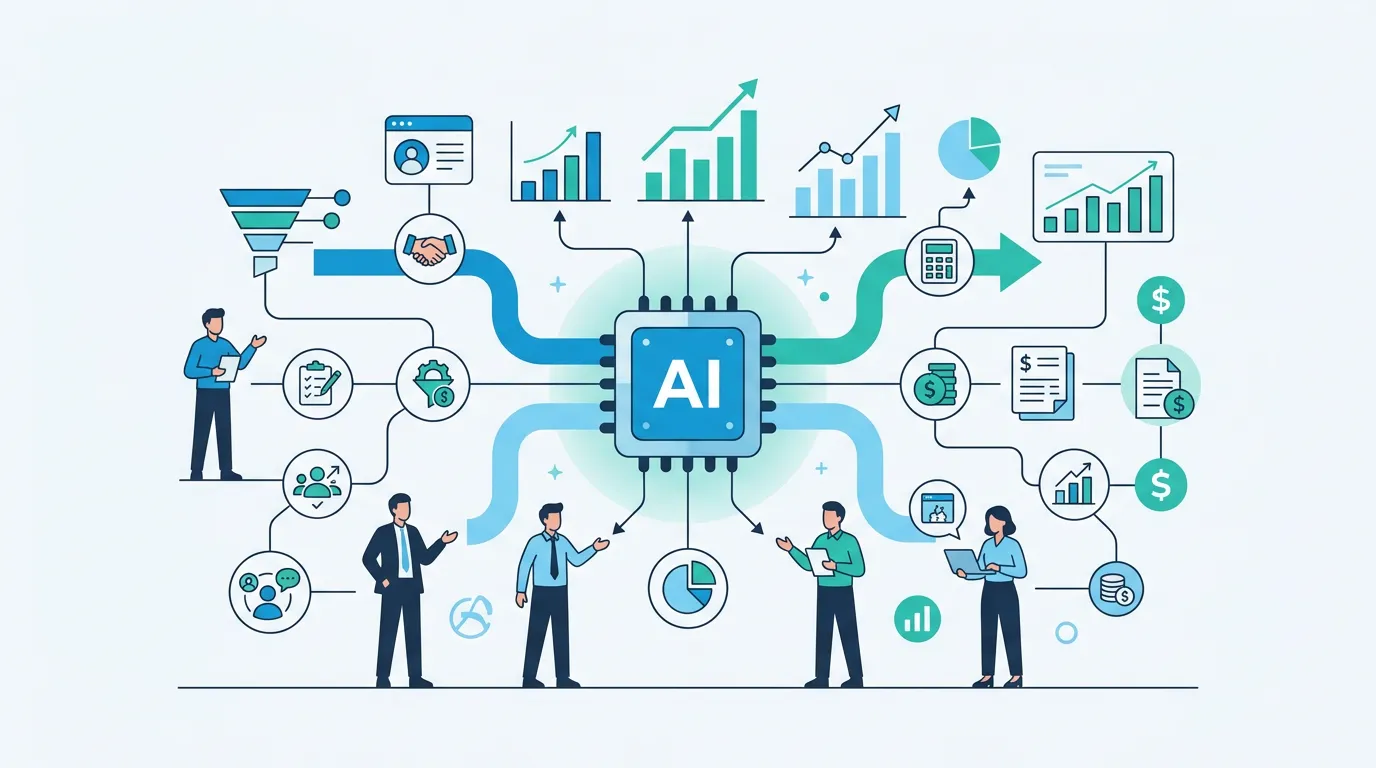
You’ve heard (and will continue to hear) a lot about how AI and LLMs will drastically change our working world. As a new set of tools helping companies mine for new value and efficiencies, senior leaders everywhere are pressured to adopt a growing array of AI products. The sheer speed with which new AI-centric technologies are getting released hints strongly that this latest tech wave is different from the last few that have gotten similar hype. Anyone remember IoT? How about the ever-present lurking of crypto?
While those tech waves have yet to prove their value at a wide scale, it’s clear to most that AI is different. Like electricity, It represents a new kind of energy that companies can harness to meet their goals: better customer experience, improved financial performance, increased team productivity, and more.
But energy requires fuel – until the laws of thermodynamics are conquered once and for all, AI, like energy, will require fuel in order to work. We all know that AI relies on massive amounts of compute as one type of fuel in order to function, but that’s not the whole story. What else does it need? In a word, Data.
In a recent interview, OpenAI’s head of developer relations, Logan Kilpatrick, emphasized an inescapable truth about AI: “Context is the only thing that matters.” He goes on to say “It so deeply wants to answer your question…without that context, it’s just hard to give you anything of value.”
These are powerful statements that address the heart of every important AI implementation issue point blank: With context, AI can provide a transcendent level of insightful output – the kind of next-level response that massively accelerates how people work – and that most leadership strives for.
With the right context, you can get AI to do amazing things, even in the most unlikely places.
Without context, you get generic, irrelevant, insightful responses that might make you question why you’re using AI in the first place.
What does this mean in the Salesforce ecosystem?
We’ll explore this theme and more in future posts, so make sure to follow us on LinkedIn to keep up with the latest.