






How to Integrate QuickBooks with Salesforce
A step-by-step guide to integrating QuickBooks Online with Salesforce: install the app, connect your account, map your data, and sync in real time.
Breadwinner Team
August 28, 2026
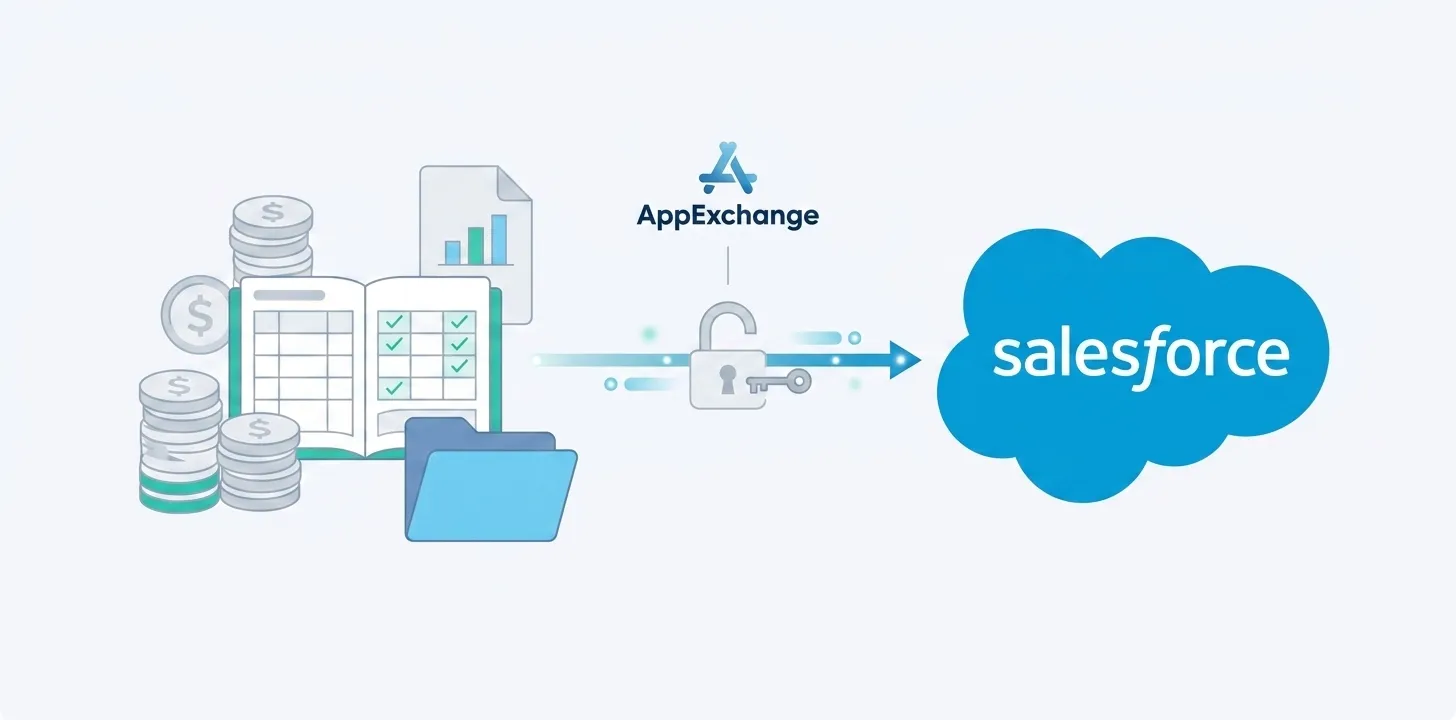
To integrate QuickBooks with Salesforce, install a native QuickBooks app from the Salesforce AppExchange, click Connect to QuickBooks and authorize your QuickBooks Online account, map your customers, invoices, and payments to Salesforce records, then turn on sync. With a native app like Breadwinner it takes hours, not weeks, and data flows both ways in real time with no middleware.
Before you start
This guide is a hands-on setup walkthrough for connecting QuickBooks Online to Salesforce using a native AppExchange app. A couple of quick prerequisites:
- You’ve picked your approach. There are a few ways to connect the two — a native Salesforce app, an API-only/iPaaS tool, or a custom build. If you’re still weighing them, start with our breakdown of API vs native apps for QuickBooks; this guide follows the native-app route, which is the fastest for most teams.
- You’re on QuickBooks Online. Native cloud apps connect to QuickBooks Online, not QuickBooks Desktop (more on that in the FAQ).
- You can install apps into your Salesforce org (or a sandbox to test first).
With that in place, here’s the whole setup, which takes hours from start to finish.
Step 1 — Install the app from the AppExchange
In your Salesforce org, open the AppExchange, find a native QuickBooks integration app (this walkthrough uses Breadwinner), and click Get It Now to install it into your production or sandbox org. Because it’s a native managed package, it installs like any other Salesforce app — nothing to host or run outside Salesforce.
Step 2 — Connect your QuickBooks Online account
Open the app inside Salesforce and click Connect to QuickBooks. You’ll be sent to Intuit’s secure login to authorize the connection — standard OAuth, so you’re signing in to QuickBooks directly rather than handing a password to the app. Approve access and your QuickBooks Online company is linked to Salesforce.
Testing with a sandbox? Connecting a QuickBooks sandbox works slightly differently from a live company — use the sandbox-specific connect option rather than the standard button, or the connection won’t take.
Step 3 — Map your data
Choose what syncs and how records line up:
- Customers ↔ Salesforce Accounts / Contacts
- Invoices, payments, and credit memos ↔ related records on the account
- Products / items and any custom fields you rely on
A good native app ships with sensible default mappings, so most teams keep the defaults and only adjust unusual cases. Auto-matching links each QuickBooks customer to the right Salesforce account, so records land where reps already look.
Step 4 — Turn on sync and verify
Enable the sync and confirm it flows both ways: raise or edit an invoice and check it appears on the Salesforce account; update a customer in Salesforce and confirm it posts back to QuickBooks. With a real-time native integration those changes appear in near-real time — no nightly batch, no manual export.
That’s the whole loop. Your sales team now sees live invoices, payments, and balances inside Salesforce, and finance stops fielding “did they pay?” pings. For the full feature set and pricing, see Breadwinner’s native QuickBooks Salesforce integration. To put the same data in front of your Agentforce agents, see how to connect QuickBooks to Agentforce.
Frequently asked questions
How do I connect QuickBooks Online to Salesforce?
Install a native QuickBooks app from the Salesforce AppExchange, click Connect to QuickBooks and authorize the connection through Intuit, map your customers, invoices, and payments to Salesforce records, then turn on sync. With a native app the whole process takes hours.
Do I need to code anything to integrate QuickBooks with Salesforce?
No. A native AppExchange app installs and configures through a guided setup with pre-built field mappings — no code required. Coding only comes in if you choose a custom API build instead of a native app or iPaaS tool.
Does QuickBooks Desktop integrate with Salesforce?
Native cloud integrations like Breadwinner connect to QuickBooks Online, not QuickBooks Desktop. Integrating Desktop with Salesforce generally requires a different approach, such as middleware or a custom connector — or migrating to QuickBooks Online first.
How long does it take to integrate QuickBooks with Salesforce?
With a native Salesforce app, most teams install, connect, map their data, and start syncing in hours. iPaaS or custom-built integrations take longer because you configure or code the connection yourself.
Ready to connect QuickBooks and Salesforce? See how Breadwinner syncs invoices, payments, and customers in real time — book a demo.